Early in the modern prophetic movement in 1988, I remember learning the importance of the three-stage process of properly handing revelation. These three basic but essential principles each build upon each other: (1) Revelation, (2) Interpretation, and (3) Proper Application! Without discovering that framework, we might have continued to take every word literally, never realizing that God might sometimes speak in symbolic language. These three principles have become vital building blocks for understanding the prophetic. We also learned there is a trifold nature of the prophetic. It is: 1) Partial, 2) Progressive and 3) Conditional. So let me build on these foundational principles with some additional understandings to unpack the anatomy of a prophetic word.
Receiving Pure Revelation
 How can we know if a word is genuine? It is too easy to dismiss a word as being “off ” simply because we do not consider all of the factors. First, we must evaluate the source of the word. We must learn to discern the difference between three different primary voices that come our way: God’s Holy Spirit, our own thoughts and flesh, and the demonic noise thrown to us by demonic forces. John advises us to “test the spirits to see if they are from God” (1 John 4:1). How should we do that? We cannot test a word by its fruits yet, if it has not been delivered, but we can anticipate its results to some extent. Will the word express God’s love to the hearers, even as it convicts them? Or will it bring them condemnation and hopelessness? Are your own emotions and opinions part of the mix? Have you left an opening for the devil in your own life lately? Just because something comes to us in a “spiritual” way does not guarantee that it comes from a pure source. Satan is a spirit, too, and he is deceptive by nature. “This is the spirit of the antichrist,” wrote John (1 John 4:3). Even one of Jesus’ premier disciples, Peter, had to suffer a rebuke from the Lord “Get behind Me, Satan!”—really a rebuke of the evil spirit who had incited him to say, “God forbid it, Lord! This shall never happen to You” (Matthew 16:22-23). The written Word of God is always the best test of any word of revelation. As the psalm tells us: “Your word is a lamp to my feet and a light to my path” (Psalms 119:105). In particular, a word will more likely be genuine if a prophet has been studying the Word and letting it inform his or her thoughts and judgments. Words from God do not come to us only as thoughts that are meant to be spoken. The Lord makes His words known to us in a wide range of ways, including visions, dreams, parables (see Hosea 12:10), “dark sayings” (see Psalms 78:2, Proverbs 1:6), natural things (see Jeremiah 18), angelic encounters, and, as He did with Moses, face to face (see Numbers 12:8). It takes discernment!
Proper Interpretation
Too often, genuine words from God have been judged as false because of a misconception, wrong timing, or a misinterpretation and thus a wrong application.  I am eternally grateful that Peter got it right when he was presented with the vision of the sheet filled with foods that he as a Jew was forbidden to eat (see Acts 10). Not that he found it easy to understand: “Peter was greatly perplexed in mind as to what the vision which he had seen [revelation] might be [interpretation]” (Acts 10:17). But we can never expect to understand spiritual matters; our human comprehension is inadequate. Rather than trying to understand everything on our own, it is vital to simply ask God for interpretation help. That is what Zechariah did. He said, “I saw at night [revelation]…then I said, ‘My Lord, what are these?’” [In other words, “what is the interpretation?”] (Zechariah 1:8-9). Though Zechariah was a seer with a proven track record, he did not assume he could interpret properly. We must cultivate seeking hearts. God has a personal alphabet or language for each of us, and it is only through experience that we grow in our understanding of our own patterns of interpretation.
Correct Application
Having received a prophetic word by some means, it is far from an automatic process to interpret its meaning and assess how to deliver it or act on it. In the New Testament, the account about Paul and the prophet Agabus is instructive, because it demonstrates how this respected prophet (and those who witnessed the prophecy) were not equipped to go beyond the prophetic warnings to give Paul a good application. All of them thought, because the warnings were so consistent and dire-sounding, that Paul should cancel his plans to travel to Jerusalem (see Acts 21:10-14). In every church, the people loved him dearly, and they did not want to lose him (see also Acts 20:36-38). Some other disciples in Tyre had even told Paul directly not to go to Jerusalem (see Acts 21:4). It was true that imprisonment and much personal harm awaited him. But Paul himself had heard from the Lord about this, and he had already made up his mind to go anyway having counted the cost. What excellent discernment and tenacity and courage! Paul was not unmoved by their tears and pleas, for he respected their prophetic gifts and he knew that the consequences of his actions could be fatal. But when faced with the choice (the application of God’s word) he decided, My life is not my own. I am going to pay the cost and go to Jerusalem, regardless. I fully expect to get put in prison and more—which is what happened.
Appropriating God’s Word
Sometimes we do hear the Lord, but because we respond out of our minds or with a preconceived negative understanding, we reject a word as invalid. We read in Hebrews: “The word they heard did not profit them, because it was not united by faith in those who heard” (Hebrews 4:2). Other times, the hearts of the hearers are just not “good soil,” as Jesus put it in his Parable of the Sower (see Matthew 13:1-23). The parable portrays the importance of having the proper condition of heart in order to receive the implanted word of God. So, we see that at least three keys are needed to unlock God’s prophetic words so that the proper actions can be taken. They are as follows: (1) faith, (2) the right soil, and (3) diligence in seeking. When we have been presented with a promise from God, our diligent seeking must often include questions about the unrevealed conditions that must be met before the word can come to pass. A conditional clause lies behind each promise, and it is not always obvious.
Heart Motivation
Truly God looks into the hearts of both those who receive prophecies and those who deliver them. He matches His words to the hearts, for His purposes, revealing the heart motivation in the process. God always looks deeply into our hearts. What is our real inner motivation? Do we want glory for the Lord or promotion for ourselves? Sometimes prophets can become overly concerned about their reputations, trying hard to be right. You can be wrong in having the goal of being right. A heart motivation of developing a good track record is not the same as letting love be your aim (see 1 Corinthians 14:1). Most of us cling tightly to the goal of being right and find it difficult to confess our mistakes. We have to grow into letting love be our only motivation and our goal.
Discerning the Timing
 There is a kairos time, an appointed, strategically appropriate time, for events to occur. Prophetic people need discernment as they deliver words concerning events and developments. Fulfillment is a process, as Jesus said: “The soil produces crops by itself; first the blade, then the head, then the mature grain in the head” (Mark 4:28). He Himself was the fulfillment of many promises, and yet the timing of His coming was not clear until it happened: “when the fullness of the time came, God sent forth His Son” (Galatians 4:4). Habakkuk’s word is a wise one: “For the vision is yet for an appointed time; but at the end it will speak, and it will not lie. Though it tarries, wait for it; because it will surely come, it will not tarry” (Habakkuk 2:3, nkjv). The Holy Spirit may speak very clearly, only to have the fulfillment surprise everyone.
Growing in Fruitful Prophetic Maturity
The Lord’s ways are not our ways and His thoughts are not our thoughts. His ways are far above ours, and He knows the end from the beginning. Without stifling the Holy Spirit and being over-cautious, we must nevertheless not swing the other way into ungoverned license. Yes, we must create an atmosphere of faith and expectation so the Holy Spirit can move freely. But let’s add wisdom with our discernment so that we can grow in our understandings of the ways of God concerning the anatomy of a prophetic word!
Keys to Unlocking the Promise,
James W. Goll
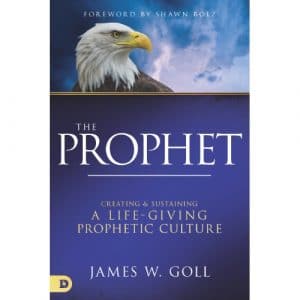 If you enjoyed James Goll’s “The Anatomy of a Prophetic Word,” then you’ll love James Goll’s NEW book The Prophet! When you purchase the book you will also receive 12 bonus video devotionals by James W. Goll that correspond with each chapter. Order your copy today and begin growing in your prophetic gift! Buy Now