It may surprise you to know that people who have been given the gift of prophecy do not necessarily predict future events. In fact, most of the time, they don’t. And most of us who prophesy have never considered wearing a John-the-Baptist-style hairy shirt! Despite popular depictions of prophets as solitary wilderness-dwellers, today’s prophets are distinct and unique members of the body of Christ who have the ability to present a straightforward “human report of a divine revelation.” A lot of change and progress has happened in the global prophetic movement. Over the years, bridges have been built among the diverse prophetic community. Whether it is the “Seer” visionary anointing versus the “Nabiy” spontaneous flow, whether it is the combustion of the “Inspirational Preaching Prophet” versus the gentle, sage wisdom of the “Interpretive Teacher Prophet”, or whether it is delivered in worship, art, writing, media, evangelism or prayer, today we celebrate diversity versus uniformity.
Raising the Bar
I want see the Bar Raised High in the prophetic community (as well as for all the 5-Fold ministries and any in leadership). Let’s not compromise the standard of integrity while being people of authentic grace. Now let’s be real. We all fail. Prophetic types might become territorial, insecure, feel threatened and even jealous. At times we get off track and promote gifting ahead of intimacy. In turn, leaders can sometimes promote one person over another based upon who has the biggest draw. We can lose our balance and forget to keep the “main thing the main thing.” Remember, the spirit of prophecy is the testimony of Jesus. There are significant standards that I attempt to hold myself to (as well as those within my sphere of influence).
- That we find our identity in Christ Jesus first and foremost.
- That the written Word of God is our final authority.
- That we cultivate character to carry the gift.
- We walk in a culture of honor.
Yes, integrity matters. The fruit of the Spirit is as valued as the gifts of the Spirit. I want to see prophets who build up the body of Christ, including the local church, and who walk in accountability and community. These are high goals – I know. And yet, these are basic standards that every true disciple of Jesus should have as their aim – no matter what their gift or function in life and ministry is.
 An Honest Assessment
 An Honest Assessment
In recent days, I have been pondering the purpose of the prophetic all over again. You see, it can be easy to become jaded and disillusioned. In my 40 plus years of full-time vocational ministry, having been involved in numerous movements and emphases in the body of Christ, I have watched many believers become observers who are no longer active participants. With this in mind, let’s review some of the purposes of the prophetic.
Purposes of the Prophetic Gifting
God is our good Father, and He wants to encourage us and advise us. For each new generation, He chooses prophets to deliver fresh words to accomplish His purposes. Paul wrote about three main purposes of prophecy: “One who prophesies speaks to men for edification and exhortation and consolation” (1 Corinthians 14:3). Edification refers to building up people in the faith and enabling them to be more effective in ministry. Exhortation pertains to admonishment and motivation for people to perform good deeds, and it is the same as encouragement. Consolation means giving comfort or solace, or alleviating some kind of distress. We each need encouragement. “Barnabas” was a nickname for a man named Joseph who was a Levite from the island of Cyprus. (See Acts 4:36.) Barnabas means “son of encouragement.” We can never have too much encouragement and up-building. This is one of the reasons I value prophetic gifting. The gift of prophecy is also used by the Holy Spirit to convict people of sin and to convince them of God’s good intentions toward them. Some people today wrongly teach that the convicting work of the Holy Spirit only applies to unbelievers. But I believe it applies to all of us, since all of us need additional convicting and convincing as we make our way toward holiness.  Just as the light of God penetrates the hearts of unbelievers and inquirers, so it penetrates ours, layer by layer. It is the job of the Holy Spirit to “convict [or convince] the world concerning sin and righteousness and judgment” (John 16:8), and one of the ways the Spirit does this is by speaking His rhema words through prophets like you and me. The true prophetic promotes the fear of the Lord and that results in greater purity. Prophecy is a revelatory gift as well as a vocal gift, and God uses it to instruct and teach us: “For you can all prophesy in turn so that everyone may be instructed and encouraged” (1 Corinthians 14:31 niv). This is probably one of my personal strengths. I am primarily a prophetic instructor and intercessor. No single prophet or teacher can teach everything—it takes a “cluster anointing” to do the best job. But working together, we make a great team and God’s people are made stronger.
Maturing in the Gift of Prophecy
With regard to maturing in the gift of prophecy, let us recognize that there are four categories of prophetic revelation: the spirit of prophecy, the gift of prophecy, the ministry of prophecy, and the office of a prophet. It is important to understand how they are distinct and how each has its place.
The Spirit of Prophecy
First, the spirit of prophecy refers to those occasions when the Spirit of God encompasses a group of people. God manifests His presence in the midst of the assembly in such a way that anybody can hear God and thus prophesy, whether or not they otherwise claim to have a gift of prophecy. (See 1 Samuel 19:20-21 for one example.) It is simply amazing when this takes place!
The Gift of Prophecy
Second, the gift of prophecy is the spiritual gift that God gives generously to His people in order to build them up and to help them walk with sure steps of faith. (See 1 Corinthians 12:10; 14:6, 24, 31.) This gift of the Holy Spirit is for edification, exhortation and comfort, but it does appear to include correction and direction.
The Ministry of Prophecy
Third, people who exercise the gift of prophecy consistently over time have a ministry of prophecy, developing what you could term a “residential” gift, a ministry that is not only circumstantial or occasional. Consistency is important here and it takes time to develop that narrative.
The Office of a Prophet
Beyond the ministry of prophecy is the office of a prophet (or prophetess). Those in the office of prophet are equippers; they can instruct others in how the gift operates. Lots of people who prophesy are not necessarily equippers because—they just do it (some of them brilliantly). Leaders in the office of prophet are like spiritual fathers or mothers or equippers, whose emphasis (besides broadcasting the words God gives them) is on multiplication. They teach and model a prophetic lifestyle, not just a prophetic gift. They have earned the credibility and the authority to give direction and correction in addition to edification, exhortation, and comfort. They are not self-appointed, they are recognized by others leaders and confirmed into their appropriate spheres of authority. In other words, there is a difference between revelation and authority. The bottom line is: God uses all of the varieties of prophetic categories in order to speak to His people in every situation. He uses not only the office of prophecy but also the spirit of prophecy, the gift of prophecy, and the ministry of prophecy.
Releasing the Testimony of Jesus
 Ultimately, all prophecy is about this: releasing the testimony of Jesus. Here is John’s visionary picture from the book of Revelation: Then I [John] fell at his [the angel’s] feet to worship him. But he said to me, “Do not do that; I am a fellow servant of yours and your brethren who hold the testimony of Jesus; worship God. For the testimony of Jesus is the spirit of prophecy.” (Revelation 19:10) Jesus wants to testify, and He uses men and women to do it. Those who serve as His voice do not draw attention to themselves but rather to the message and to the Messenger. Yes, the testimony of Jesus is released through the spirit of prophecy. None of the gifts of the Holy Spirit have ceased. The gifts of the Spirit are not for the elite few; they are for every believer today! Thank God it is a new day with diversity being celebrated including the joining of the generations. That is why, after 40 plus years, I still value the prophetic gifts. The best is yet to come! Thank You, Lord, for pouring out Your Holy Spirit today! I am so grateful to be alive at this time in church history. Give me more opportunities to release the fragrance of Jesus everywhere I go and to encourage and comfort others through the gift of prophecy. Come, Holy Spirit, more powerfully in my life and in the lives of my family members. In your love, empower us with Your revelatory gifts, for the sake of Your Kingdom.
Walking in His Ways,
James W. Goll
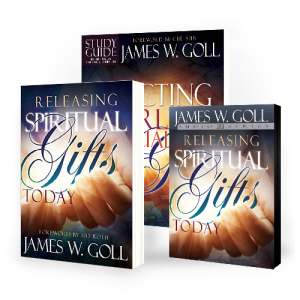 Portions of this article are taken from Chapter Twelve of my book Releasing Spiritual Gifts Today. For more information, please see the Releasing Spiritual Gifts Today Curriculum, including the book, study guide and 12 message class set.